MODULE 1 — Legal and Ethical Aspects
This module introduces students to the European regulatory framework on artificial intelligence, focusing on the EU AI Act and the European Commission’s ethical guidelines for the use of AI in education. The ‘human-centric’ approach is explored: AI as a transparent tool, never a substitute for human decision-making.
Goals
- Understand the EU AI Act and its implications in the classroom.
- Apply the principle of Human Agency: the student is always the author.
- Apply the principle of Transparency: informing when AI is used in a piece of work.
- Reflect on the legal and ethical responsibility of using generative AI.
- Distinguish ethical use from misuse of AI in creative and educational contexts.
Timeline
Time | Activity | Description | Format |
30′ | Introduction to the AI Act | Presentation of the European regulatory framework and its key principles. | Lecture |
30′ | Guided debate | Case analysis: is this ethical use or not? Real-world examples. | Discussion |
30′ | European Commission Guidelines | Human Agency and Transparency: what they mean in practice. | Explanation + examples |
30′ | Individual reflection | Students draft their own ‘ethical code’ for AI use. | Individual work |
Results
- Students gain awareness of the European legal framework and develop their own criteria for responsible AI use.
- Classroom debate helps identify real cases of ethical and inappropriate use, and students understand that they are the authors of their creations even when collaborating with AI tools.
MODULE 2 Using AI for Inclusiveness
This module presents the IAIA methodology and its pedagogical approach based on three pillars: digital readiness and resilience, transdisciplinary literacy, and co-creation. It explores how AI can remove barriers for students with different abilities, shifting the focus from ‘knowing how to draw’ to ‘knowing how to imagine and describe’.
Goals
- Understand the three methodological pillars of the IAIA project.
- Identify how generative AI can be a tool for educational inclusion.
- Recognise different learning styles and how AI can support them.
- Use tools like ChatGPT to structure ideas and overcome creative blocks.
- Reflect on the student’s role as ‘author’ in a co-creative process with AI.
Timeline
Time | Activity | Description | Format |
45′ | The 3 IAIA pillars | Explanation of the methodology with practical examples | Presentación / Lecture |
45′ | AI and inclusion | How AI Breaks Down Barriers: Case Studies and Examples from Pilot Workshops. | Debate + examples |
30′ | Practice with ChatGPT | Students use ChatGPT to structure their own creative idea. Individual/Group Work | Individual/group work |
Results
- Students understand that AI is not a shortcut but a sophisticated collaborator.
- Those with difficulties in manual drawing discover they can express complex visual ideas through language.
- A more inclusive and equitable classroom environment is created.
MODULE 3 Creative Workshop — Image Creation
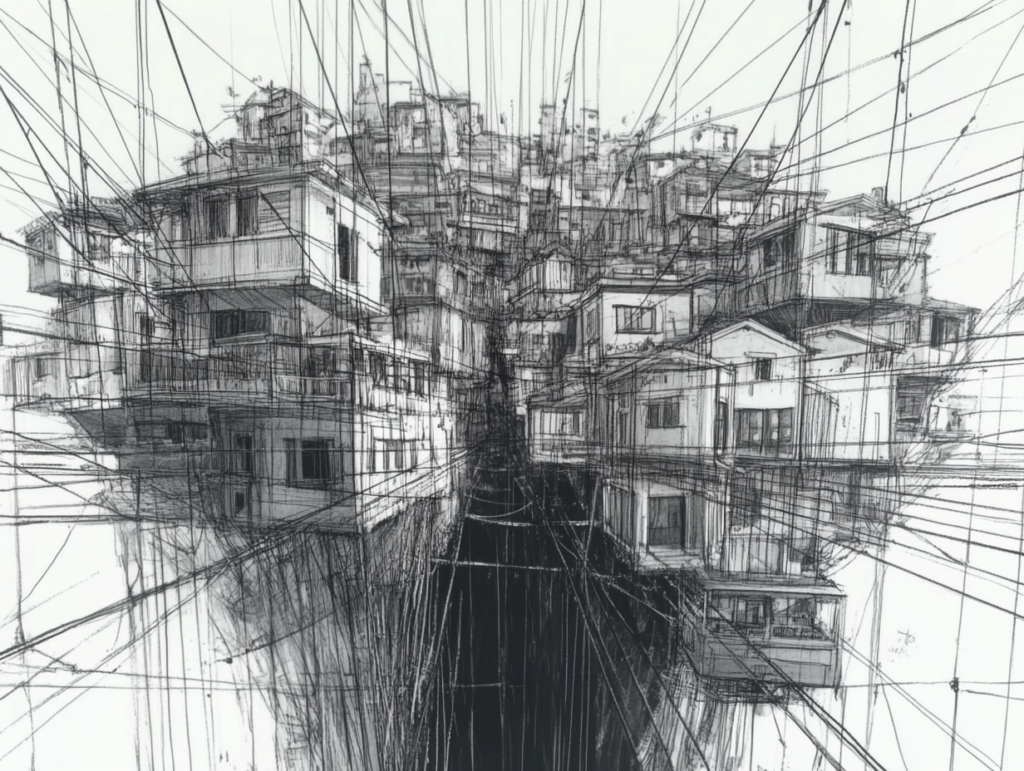
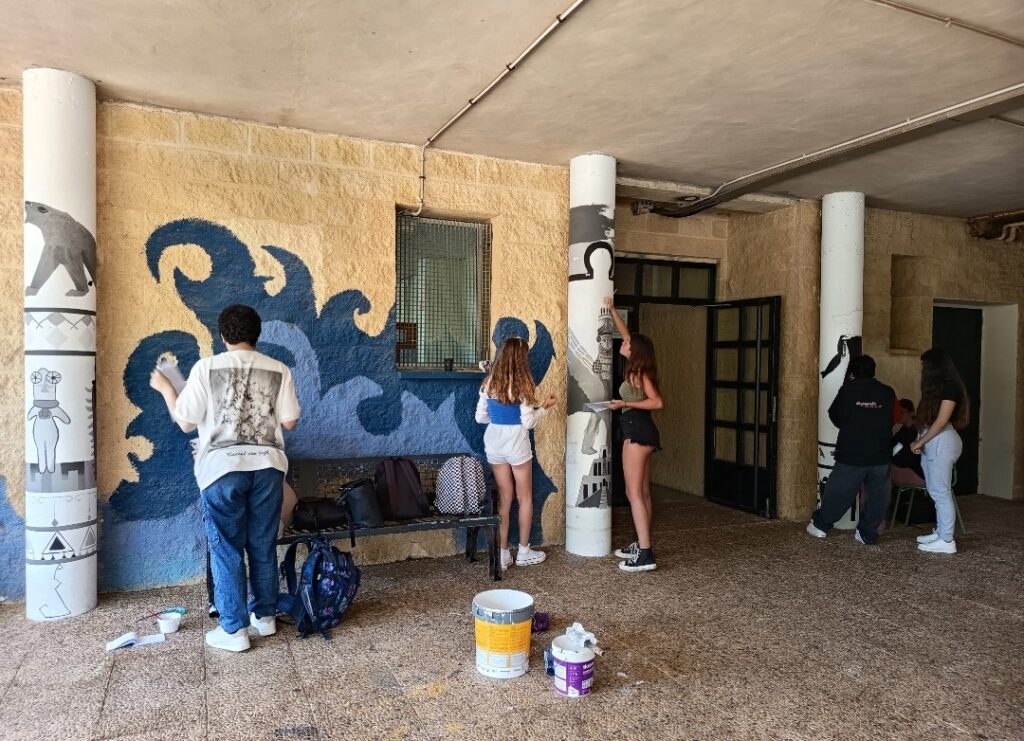
The practical core of the project. Students move from literary analysis to digital creation using generative AI tools. Inspired by Italo Calvino’s ‘Invisible Cities’, they create transmedia storyboards and interdisciplinary artistic murals combining art history, technical drawing, and AI.
Goals
- Translate complex literary metaphors into visual images through prompts.
- Use the –sref (Style Reference) command to maintain visual coherence between scenes.
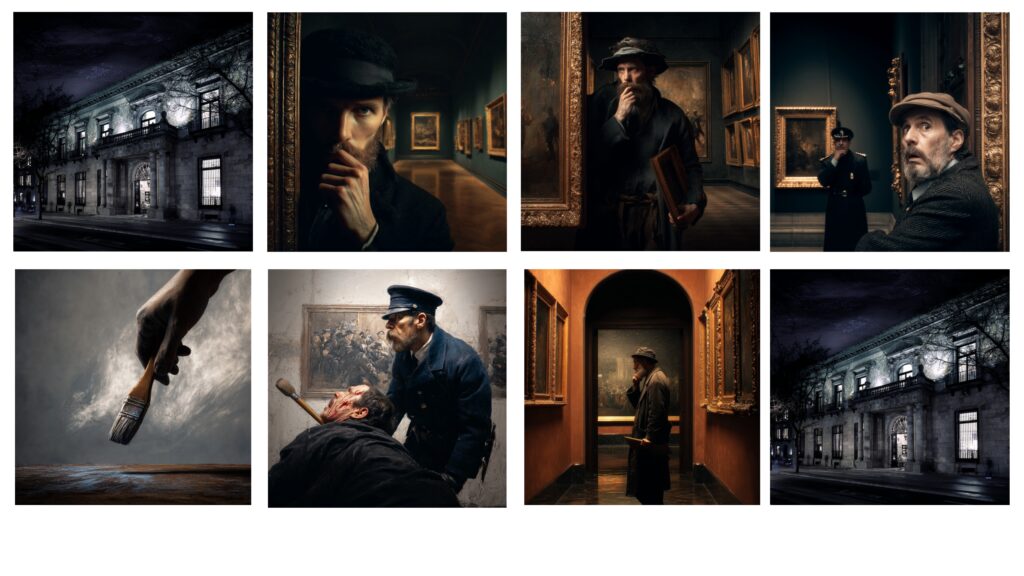
- Develop a storyboard of 6 to 10 scenes with coherent narrative.
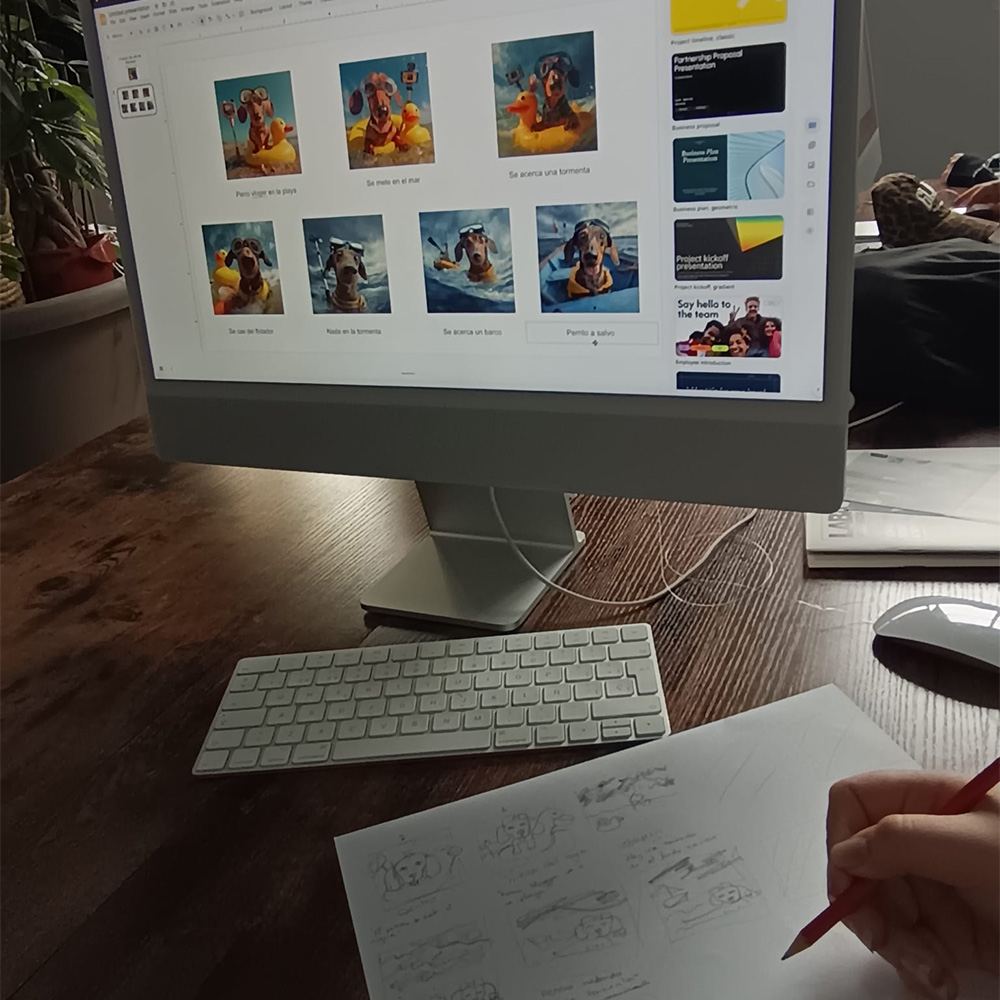
- Combine personal manual sketches with AI generation (the sketch as style reference).
- Foster critical thinking through evaluation and refinement of AI outputs.
- Work as a team to decide which output best represents the group’s creative intent.
Timeline
| Time | Activity | Description | Format |
| 60′ | Ethics and Good practices | Theoretical session about responsable use of AI, authors’ rights | Lecture |
| 60′ | Midjourney Literacy / | Introduction to the platform and prompt engineering. | Demo |
| 60′ | Creative Concept | Text selection and brainstorming. | Group work |
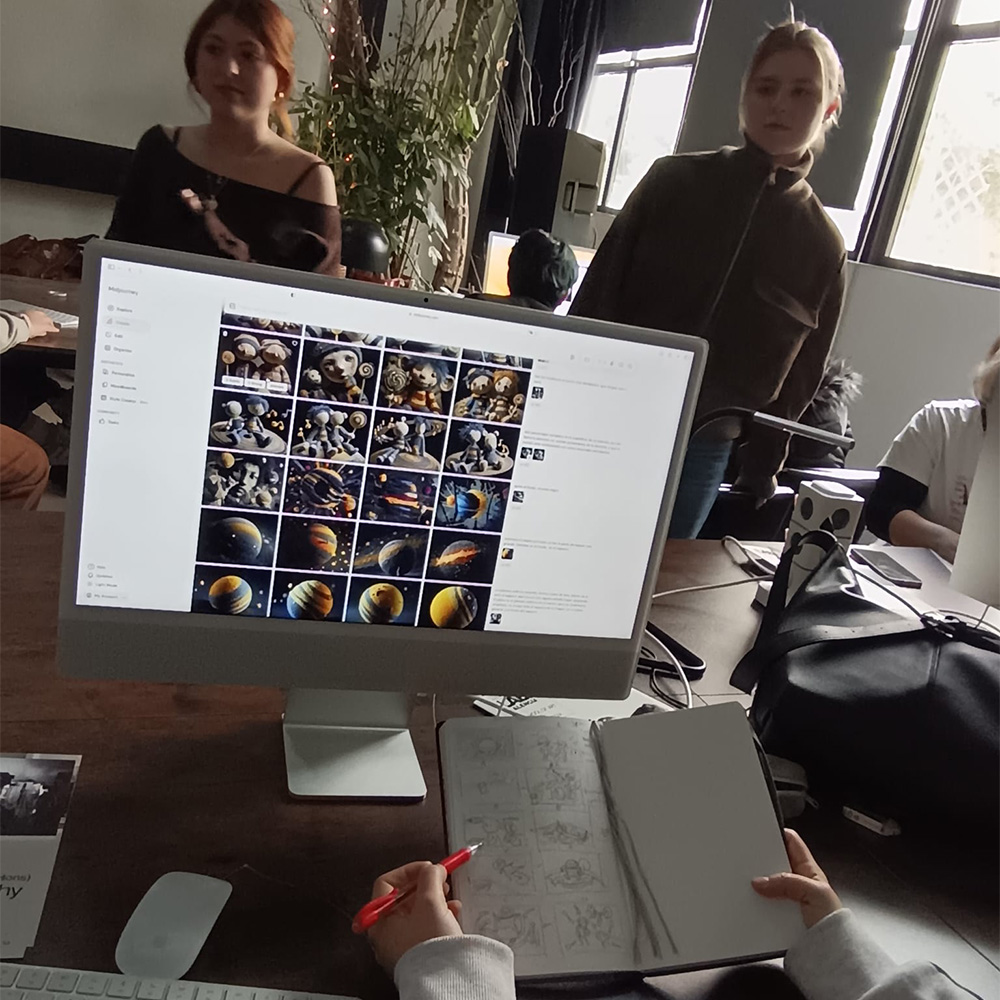
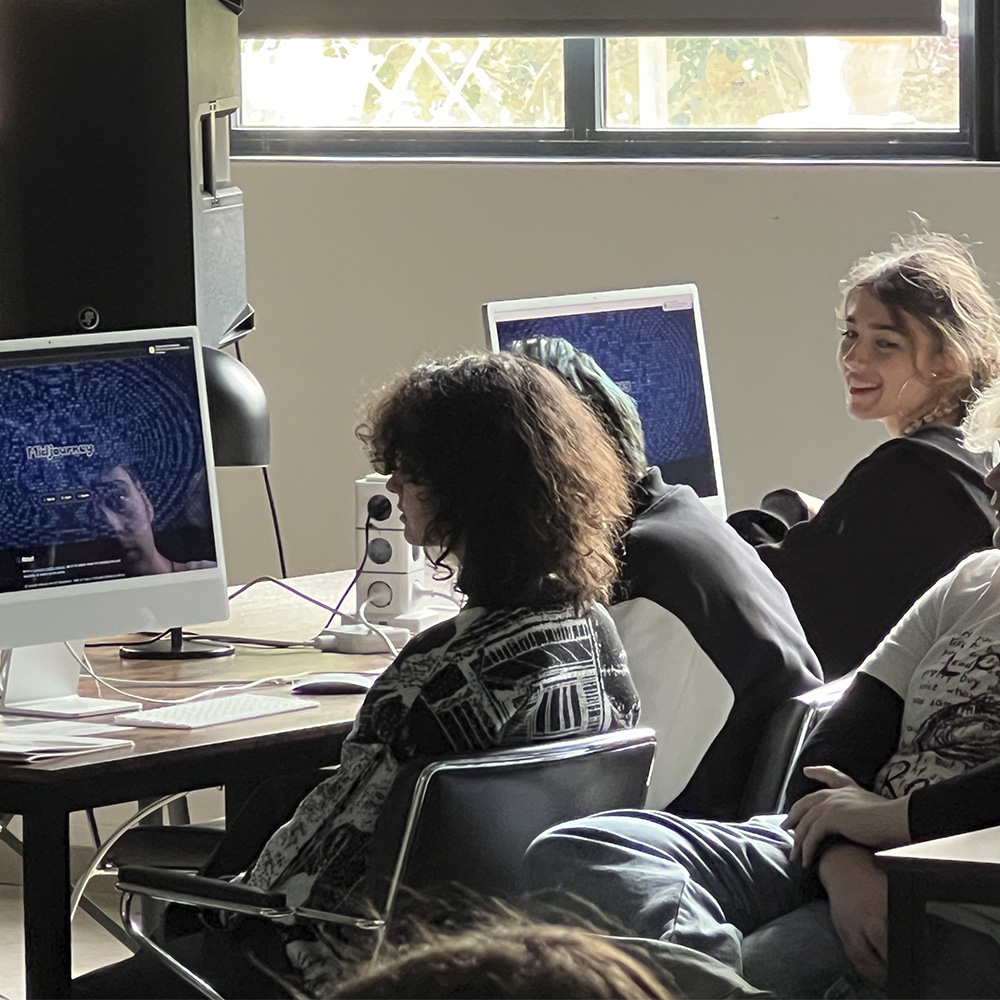
| 180′ | AI Experimentation | Image generation, use of –sref, storyboard refinement. | Hands-on |
| 60′ | Review & Discussion / | Presentation, analysis of difficulties, and final ethical reflections. | Final review |
Results
- Pilot projects demonstrated that students can produce professional-quality storyboards and permanent artistic murals.
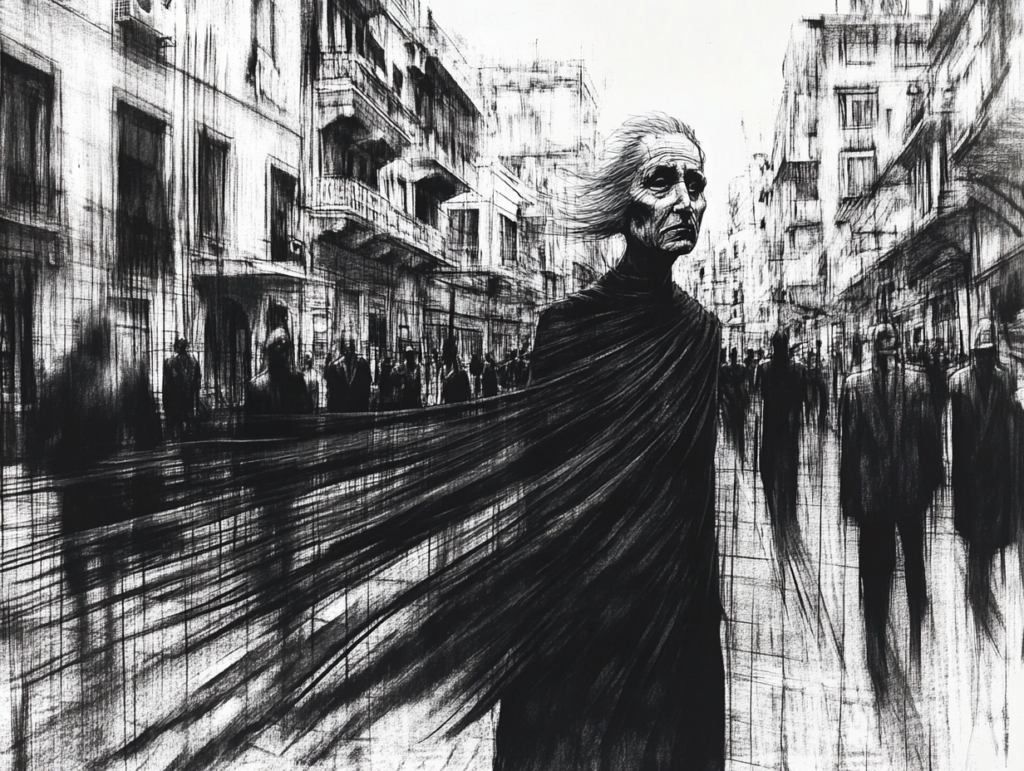
- The ‘Woman in Black’ project (transmedia storyboard) and the artistic intervention in the IES Dos Mares school courtyard are concrete examples of the results achieved. Students without formal drawing skills were able to fully participate in the creative process.
MÓDULO 4 —Workshop Creative Writing
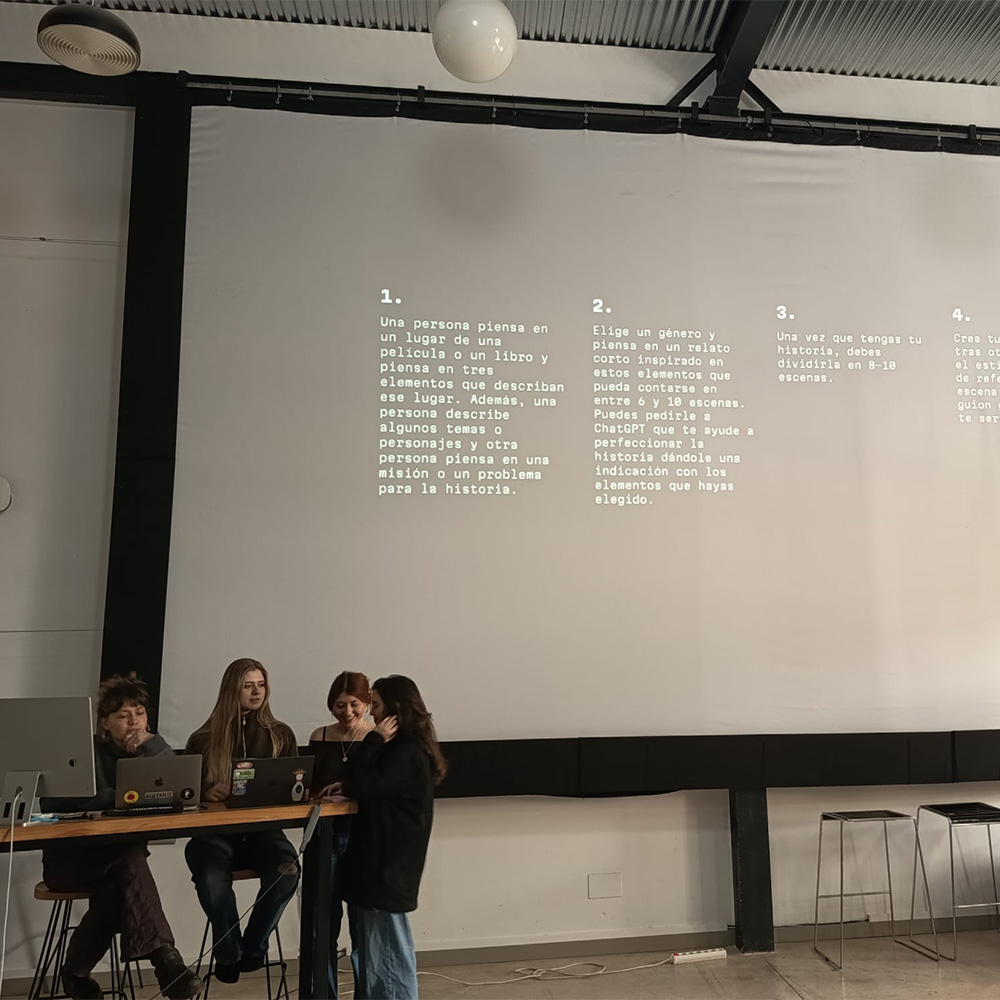
In this creative writing workshop, students build narratives from a matrix of randomised elements: Mood (narrative genre), Protagonist, and Object. The challenge is to combine these elements into a cohesive story, generating AI images that maintain visual and narrative continuity throughout the entire sequence.
Goals
- Develop the ability to connect seemingly unrelated elements into a coherent narrative.
- Learn to use previous AI generations as style references for the next (character continuity).
- Create a visual narrative sequence with consistent visual identity.
- Practice iterative prompt engineering to refine the visual identity of the protagonist.
- Reflect on the creative limits of chance as a driver of imagination.
Timeline
| Time | Activity | Description | Format |
| 60′ | Ethics and Good practices | Theoretical session about responsable use of AI, authors’ rights | Lecture |
| 60′ | Midjourney Literacy / | Introduction to the platform and prompt engineering. | Demo |
| 60′ | Creative Concept | Text selection and brainstorming. | Group work |
| 180′ | AI Experimentation | Image generation, use of –sref, storyboard refinement. | Hands-on |
| 60′ | Review & Discussion / | Presentation, analysis of difficulties, and final ethical reflections. | Final review |
Results
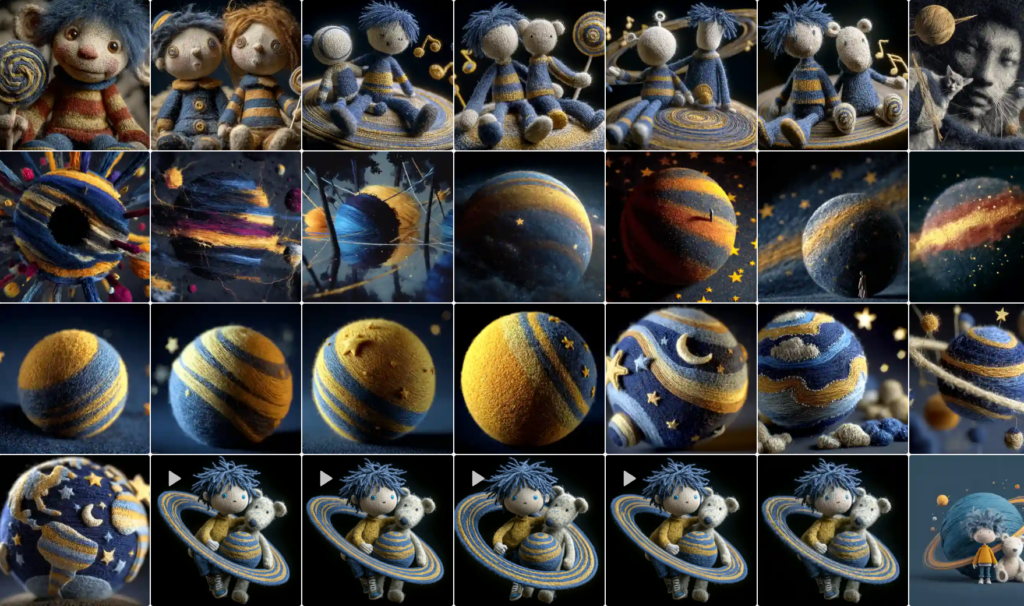
The pilot project ‘Felix, the Space Cat’ demonstrated that students can maintain the visual identity of a character and a coherent technological atmosphere across 10 images. The random narrative exercise developed problem-solving and teamwork skills, as well as a deep reflection on authorship and image rights in the age of AI.
This project has been funded with support from the European Commission.
This publication reflects the views only of the author, and the Commission cannot be held responsible for any use which may be made of the information contained therein.
| IAIA: Artificial Intelligence, Art & Inclusiveness | Small-scale partnerships in school education. | Project reference: 2023-2-IT02-KA210-SCH-000180516. | Project duration: 1 April 2024 – 31 March 2026 |